
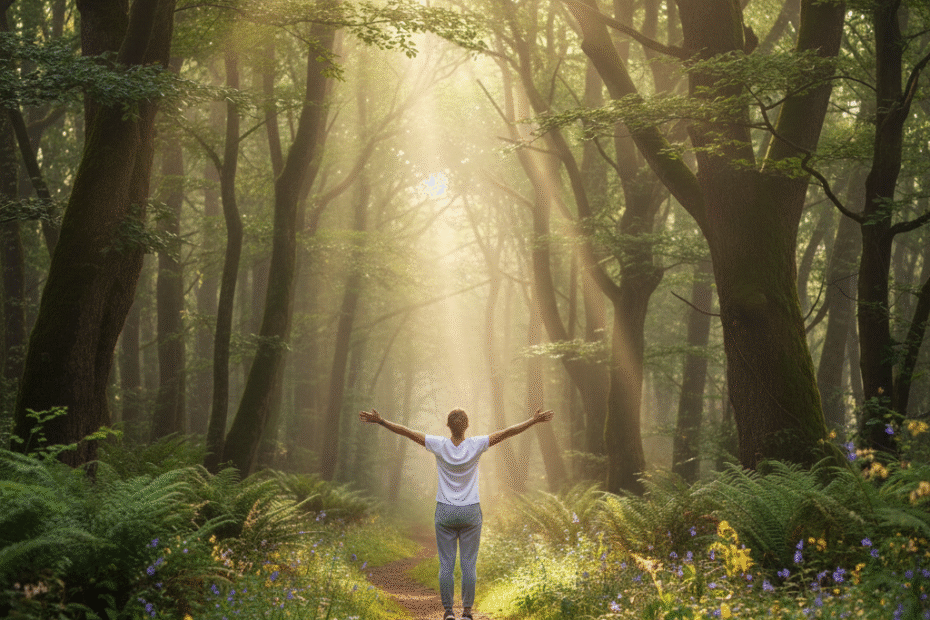
How Daily Exposure to Nature Improves Mental Resilience and Emotional Balance
In our increasingly digital and urbanized world, the connection between nature and mental well-being has never been more crucial. Scientific research continues to reveal that nature improves mental resilience in profound ways, offering a natural remedy for the stress and emotional turbulence of modern life. Understanding how daily exposure to natural environments strengthens our psychological foundations can transform the way we approach mental health care and self-care practices.
Understanding Mental Resilience and Emotional Balance
Mental resilience refers to our psychological capacity to adapt to stress, adversity, and challenging life circumstances. It’s the mental elasticity that allows us to bounce back from setbacks and maintain psychological well-being despite difficulties. Meanwhile, emotional balance represents our ability to regulate feelings, maintain stable moods, and respond appropriately to emotional triggers without being overwhelmed.
These two psychological qualities work in tandem to create a stable mental foundation. When we develop strong mental resilience, we simultaneously enhance our emotional balance, creating a virtuous cycle of psychological well-being. The question that researchers have increasingly explored is how our environment, particularly natural settings, influences these critical mental capacities.
The Science Behind Nature’s Impact on Mental Health
Numerous studies demonstrate that nature improves mental resilience through multiple biological and psychological pathways. When we spend time in natural environments, our bodies experience physiological changes. Levels of stress hormones such as cortisol decrease and levels of feel-good neurotransmitters such as serotonin and dopamine increase. This biochemical shift creates the foundation for improved mental resilience.
The concept of “attention restoration theory” explains one mechanism through which nature benefits our minds. Urban environments demand constant directed attention, exhausting our cognitive resources. Natural settings, by contrast, engage our attention effortlessly, allowing our directed attention mechanisms to rest and recover. This restoration process strengthens our mental capacity to handle future stressors, directly enhancing mental resilience.
Research also shows that natural environments reduce activity in the prefrontal cortex, the brain region associated with rumination and repetitive negative thinking. By quieting this mental chatter, nature creates space for emotional balance to emerge naturally.
researchers about nature as powerful medicine ( https://mypacifictimes.com/doctors-say-nature-is-powerful-medicine-but-its-still-underused/ )
Daily Nature Exposure: A Prescription for Emotional Balance
The relationship between consistent nature contact and emotional balance is remarkably strong. People who spend just 20 minutes daily in green spaces report significantly improved mood regulation and reduced symptoms of anxiety and depression. This isn’t about occasional weekend hikes; rather, it’s the cumulative effect of regular, even brief, nature encounters that builds lasting emotional balance.

Morning walks in parks, lunch breaks in gardens, or evening time in natural settings all contribute to stabilizing our emotional states. The predictability and rhythm of daily nature exposure creates a psychological anchor, a reliable source of calm that our nervous system learns to anticipate and respond to positively.
For those struggling with emotional volatility or mood disorders, incorporating daily nature time can serve as a complementary approach to traditional treatments. The accessibility of this intervention makes it particularly valuable; unlike many mental health resources, nature is freely available to most people.
How Nature Improves Mental Resilience Through Stress Reduction
Chronic stress erodes mental resilience over time, making us increasingly vulnerable to mental health challenges. Nature serves as a powerful stress buffer, creating what researchers call a “psychologically restorative environment.” When we immerse ourselves in natural settings, our parasympathetic nervous system activates, triggering the body’s relaxation response.
This physiological state allows our stress response systems to recalibrate. Regular activation of this relaxation response through nature exposure builds our capacity to handle stress more effectively. Over time, this creates stronger mental resilience, as our baseline stress levels decrease and our threshold for stress tolerance increases.
Green spaces and blue spaces (areas with water) prove particularly effective at reducing psychological stress. The combination of natural sounds, visual complexity, fresh air, and sometimes the presence of wildlife creates a multi-sensory experience that thoroughly engages and soothes our nervous system.
Building Emotional Balance Through Nature Connection
Emotional balance doesn’t mean experiencing constant happiness or eliminating negative emotions. Instead, it involves developing the capacity to experience the full range of human emotions without becoming overwhelmed or dysregulated. Nature facilitates this balanced emotional state through several mechanisms.
First, natural environments provide perspective. When we observe the cycles of nature—seasons changing, plants growing, natural processes unfolding—we gain context for our own emotional experiences. This perspective helps us recognize that difficult emotions, like difficult seasons, are temporary and part of a larger cycle.

Second, nature offers opportunities for mindfulness and present-moment awareness. The sensory richness of natural settings naturally draws our attention to the present, away from rumination about the past or anxiety about the future. This present-centered awareness is fundamental to maintaining emotional balance.
Third, nature provides a safe space for emotional processing. Whether we need to experience and release sadness, work through anger, or celebrate joy, natural settings offer a non-judgmental container for our emotional experiences.
Practical Strategies for Daily Nature Integration
Incorporating daily nature exposure doesn’t require extensive time commitments or access to wilderness areas. Even small doses of nature contact can significantly impact how nature improves mental resilience and supports emotional balance in your life.
Start by identifying accessible green spaces in your daily environment. This might be a park along your commute, a tree-lined street you can walk during breaks, or even a balcony garden you can tend. Consistency matters more than duration; fifteen minutes daily provides more benefit than three hours once weekly.
Create nature rituals that anchor your day. A morning walk before work, a lunch eaten outdoors, or an evening garden visit can become psychological touchstones that regulate your mood and build mental resilience over time. These rituals work best when they’re non-negotiable parts of your routine, like brushing your teeth.
Enhance your indoor environments with natural elements when outdoor access is limited. Indoor plants, natural light, nature sounds, and views of greenery all provide psychological benefits, though they don’t fully replace direct nature contact.
The Role of Biodiversity in Mental Health
Interestingly, research suggests that biodiversity matters for mental health outcomes. Environments with greater variety of plant and animal species provide stronger psychological benefits than monoculture landscapes. This may be because biodiverse environments engage more of our senses and provide richer, more complex experiences that fully capture our attention and facilitate deeper restoration.
Nature improves mental health and air quality ( Indoor Plants That Improve Air Quality and Mental Health | MyPacificTimes )
This finding has important implications for urban planning and personal choices about where to spend nature time. Whenever possible, seek out diverse natural environments rather than manicured, simplified landscapes.

Nature Improves Mental Resilience Across Populations
The psychological benefits of nature exposure appear remarkably consistent across different populations. Children develop better emotional regulation and stress management skills when they have regular nature contact. Adults working in high-stress professions show improved mental resilience when they incorporate nature time into their routines. Older adults experience reduced depression and enhanced cognitive function through regular nature engagement.
This universality suggests that our need for nature connection is fundamental to human psychology, not a luxury or preference but a basic requirement for optimal mental health.
Conclusion: Cultivating Mental Resilience Through Nature
The evidence is clear and compelling: nature improves mental resilience and fosters emotional balance in measurable, meaningful ways. By understanding and leveraging this relationship, we can take active steps to strengthen our psychological well-being through something as simple and accessible as daily time outdoors.
The path to greater mental resilience and emotional balance doesn’t require expensive interventions or complex protocols. It requires recognizing our fundamental connection to the natural world and honoring that connection through regular, intentional contact with green spaces. Whether you’re managing stress, recovering from trauma, or simply seeking to enhance your psychological well-being, nature offers a powerful, evidence-based tool for transformation.
Start today. Step outside, breathe deeply, and allow nature to work its restorative magic on your mind and emotions. Your future self, more resilient and balanced, will thank you.